Guide 04 Bahá'í literature independent reference
The Bahá'í calendar: nineteen months of nineteen days
The Bahá'í calendar, also called the Badíʿ calendar, divides the year into nineteen months of nineteen days. This guide explains the structure, the month names and the way years are counted.
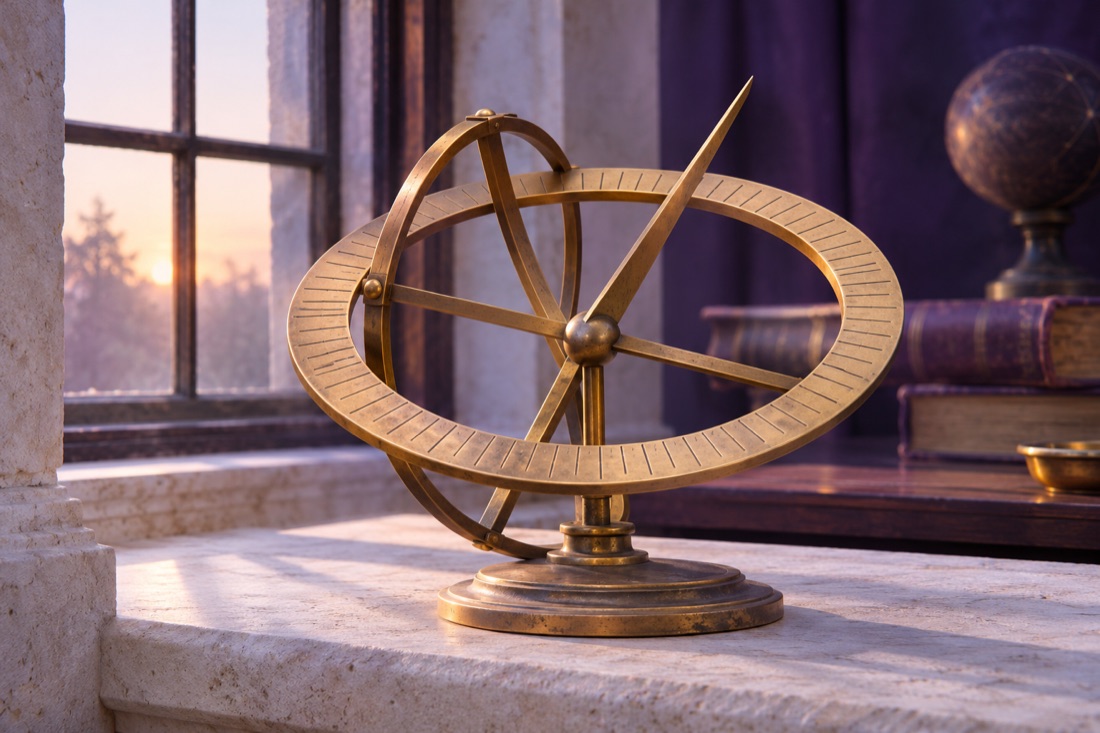
Nineteen months, nineteen days
The calendar was established by the Báb, and Bahá'u'lláh confirmed it. It has nineteen months, and each month has nineteen days. That gives 361 days, and the remaining days of the solar year are added as a separate period, so that the calendar stays tied to the seasons. The number nineteen has a symbolic root: the Báb and his first eighteen followers, called the Letters of the Living, make nineteen.
The names of the months
The months are named for attributes of God, each in Arabic. In order they are Bahá (Splendour), Jalál (Glory), Jamál (Beauty), 'Azamat (Grandeur), Núr (Light), Raḥmat (Mercy), Kalimát (Words), Kamál (Perfection), Asmá' (Names), 'Izzat (Might), Mashíyyat (Will), 'Ilm (Knowledge), Qudrat (Power), Qawl (Speech), Masá'il (Questions), Sharaf (Honour), Sulṭán (Sovereignty), Mulk (Dominion) and 'Alá' (Loftiness). The nineteen days of each month carry names from the same list.
Ayyám-i-Há
The extra days are called Ayyám-i-Há, usually translated as the Days of Há. They fall before the last month, and there are four of them in an ordinary year and five in a leap year. The Aqdas sets them aside for hospitality, charity and the exchange of gifts. The final month, 'Alá', is the month of the annual Fast, and the New Year follows it.
Counting the years
Years are counted from 1844, when the Báb declared his mission, and are written as Bahá'í Era or BE. Year 1 began in March 1844. The year 183 BE began in March 2026 and runs to March 2027, so that is the year it is for a Bahá'í in late 2026. To convert a Gregorian date, subtract 1843 from the year for dates after Naw-Rúz in March, and 1844 for dates from January to the New Year.
The Nineteen Day Feast
The first day of each month is marked by a gathering called the Nineteen Day Feast. It has a devotional part, a consultative part in which the community discusses its affairs, and a social part. Because each month has nineteen days, the Feast returns roughly every nineteen days across the year.
Dates that move
In 2015 the Universal House of Justice brought the Badíʿ calendar into worldwide use. The New Year, Naw-Rúz, is now fixed to the March equinox as it falls in Tehran, so it is on 20 or 21 March. The Twin Holy Days depend on the lunar cycle. The result is that the Gregorian dates of some holy days differ slightly each year; see the holy days guide and the official Bahá'í calendar page for the current year.