Guide 07 Bahá'í literature independent reference
Bahá'í Faith history: from Shiraz in 1844 to Haifa
The Bahá'í Faith began in nineteenth century Persia. This timeline follows the main figures and dates, and shows how each stage produced a layer of the Bahá'í literature.
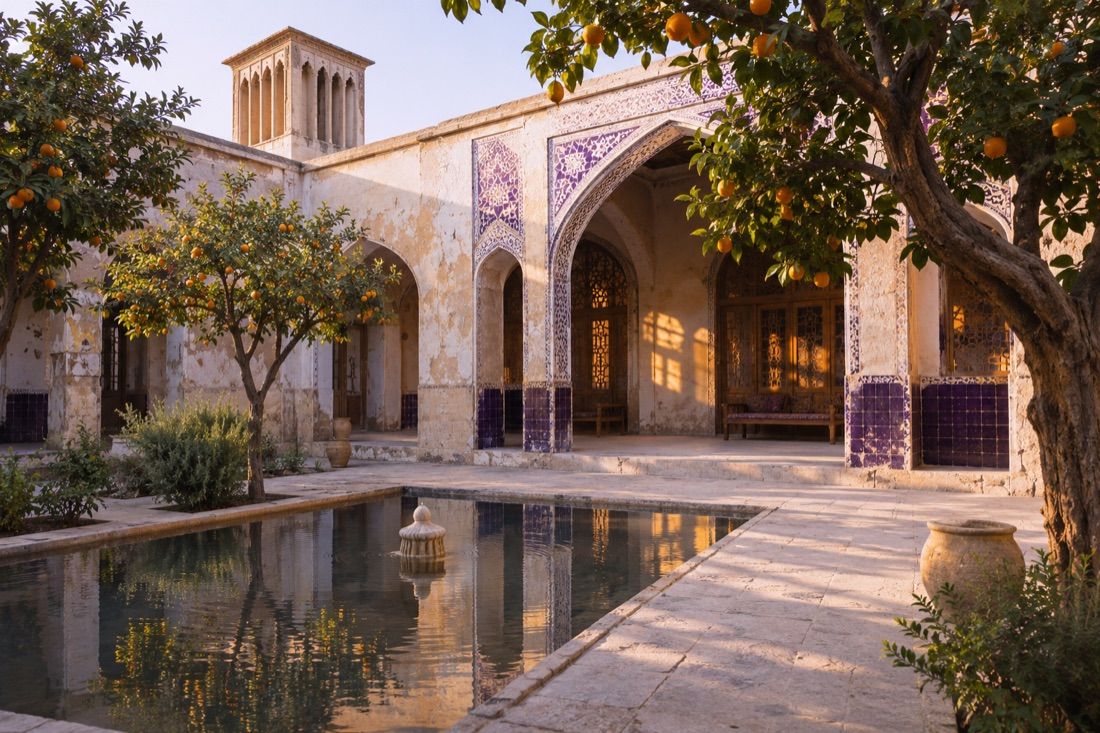
Persia, 1844
The story begins in Shiraz, in Persia, on 23 May 1844. A young merchant named Siyyid 'Alí-Muḥammad announced that he was the bearer of a new message and took the title the Báb, which means the Gate. His followers became known as Bábís. They expected a further messenger of God, and the Báb said that this figure would soon appear.
The Báb
The Báb's teachings spread quickly and met strong opposition from religious and political authorities. He was imprisoned, and he was executed by firing squad in Tabriz on 9 July 1850. Thousands of his followers also died in persecutions in those years. His writings, which include laws and many prayers, are part of the Bahá'í literature.
Bahá'u'lláh in exile
Mírzá Ḥusayn-'Alí, later called Bahá'u'lláh, was a Bábí from a noble family. He was imprisoned in Tehran in 1852 and then exiled to Baghdad. In April 1863, in a garden he named Ridván, he declared that he was the figure the Báb had foretold. He was then exiled to Constantinople and Adrianople, and in 1868 to the prison city of 'Akká. Most of his surviving works were written in these years.
'Abdu'l-Bahá
After Bahá'u'lláh died in 1892 his eldest son, 'Abdu'l-Bahá, led the community under the terms of his father's will. He was released from imprisonment in 1908 after political changes in the Ottoman Empire and travelled in Egypt, Europe and North America between 1911 and 1913. He died in Haifa in 1921.
Shoghi Effendi
'Abdu'l-Bahá's grandson, Shoghi Effendi, became the Guardian of the Faith. He translated key texts into English, developed the buildings at the World Centre and guided the spread of the community around the world. He died in London in 1957.
The Universal House of Justice
Because the Guardian left no successor, the community elected the Universal House of Justice for the first time in 1963 in Haifa, as the writings of Bahá'u'lláh provide. It has led the community since. In many countries the community now runs on local and national elected councils. In Iran, where the Faith began, Bahá'ís have faced restrictions and persecution, a situation documented over many years by United Nations human rights bodies.
Why history shapes the literature
Each stage left its mark on the written heritage: the Báb's declarations and laws, Bahá'u'lláh's letters from exile, 'Abdu'l-Bahá's talks, and Shoghi Effendi's translations and histories. For the places these events happened, see the World Centre guide, and for the texts themselves, the overview of the writings. The Wikipedia article on the Bahá'í Faith offers a broader outside summary.